

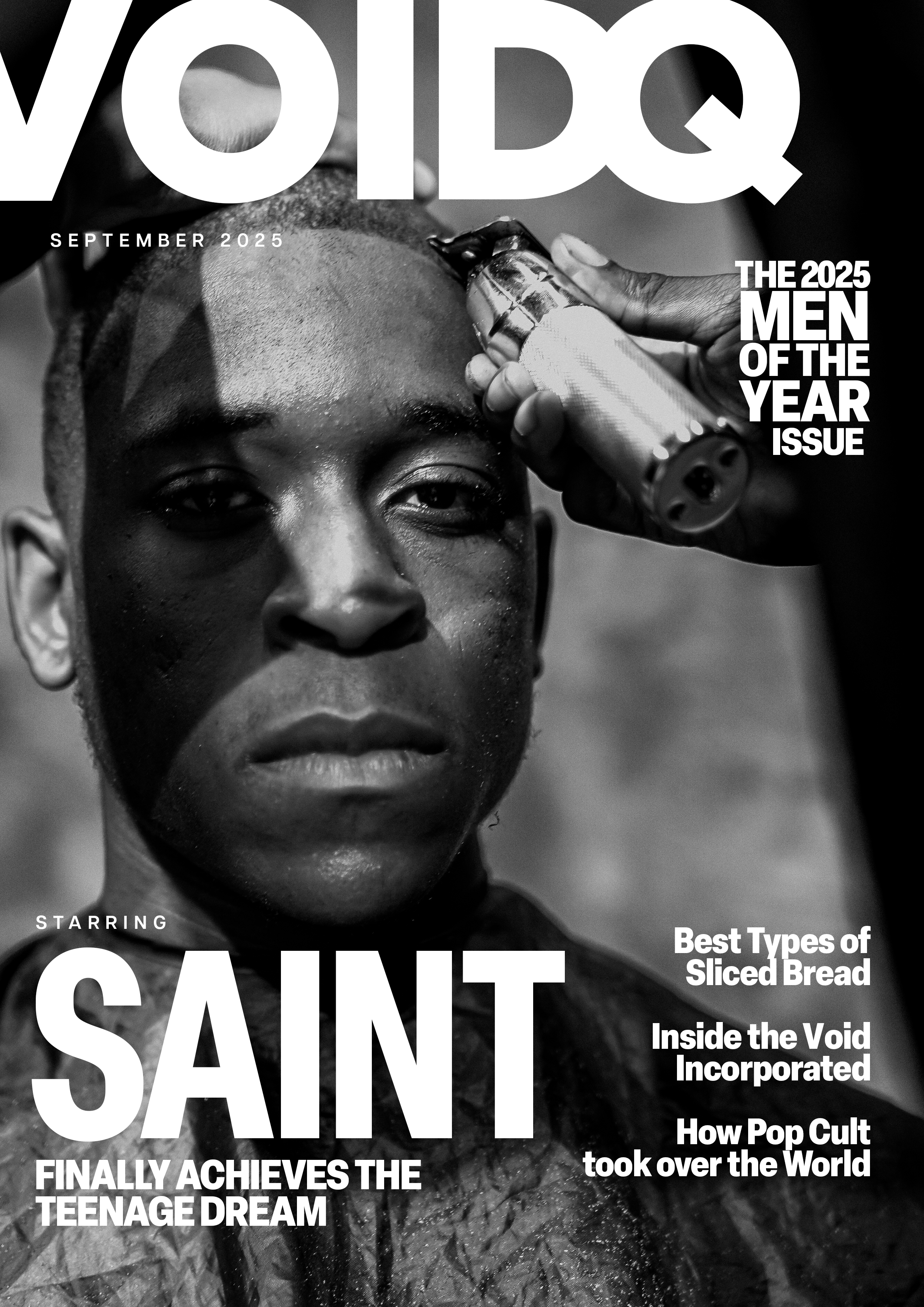
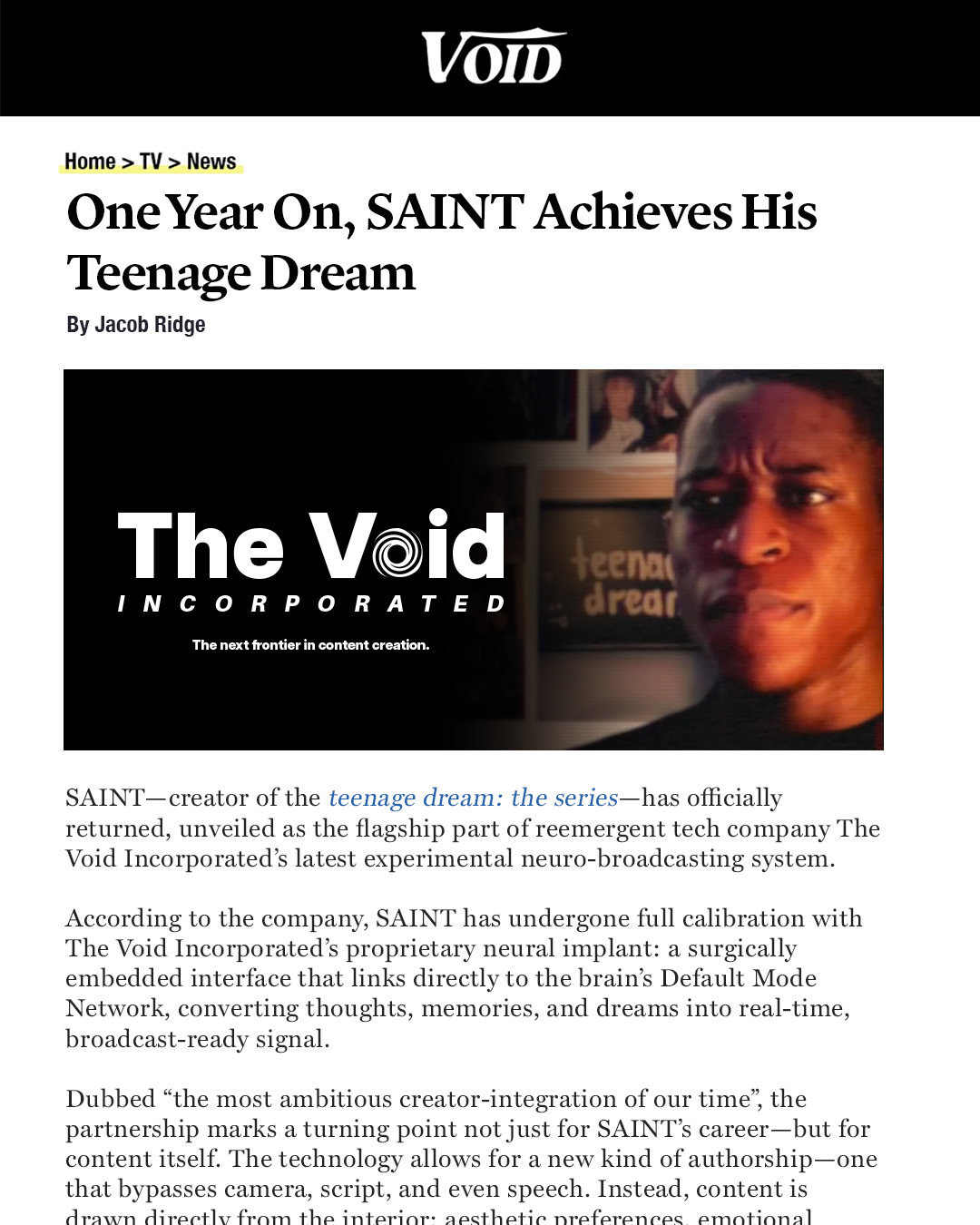
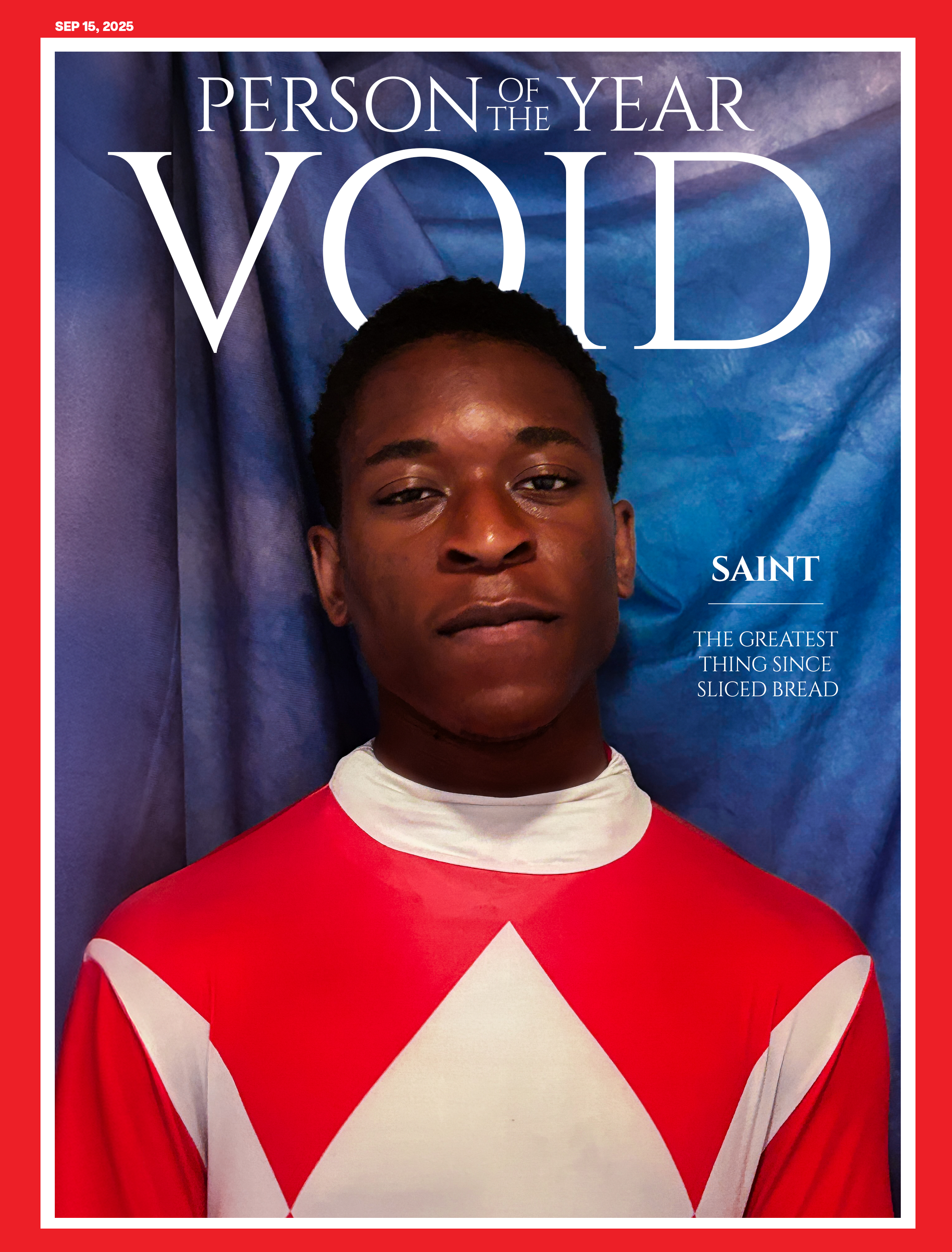
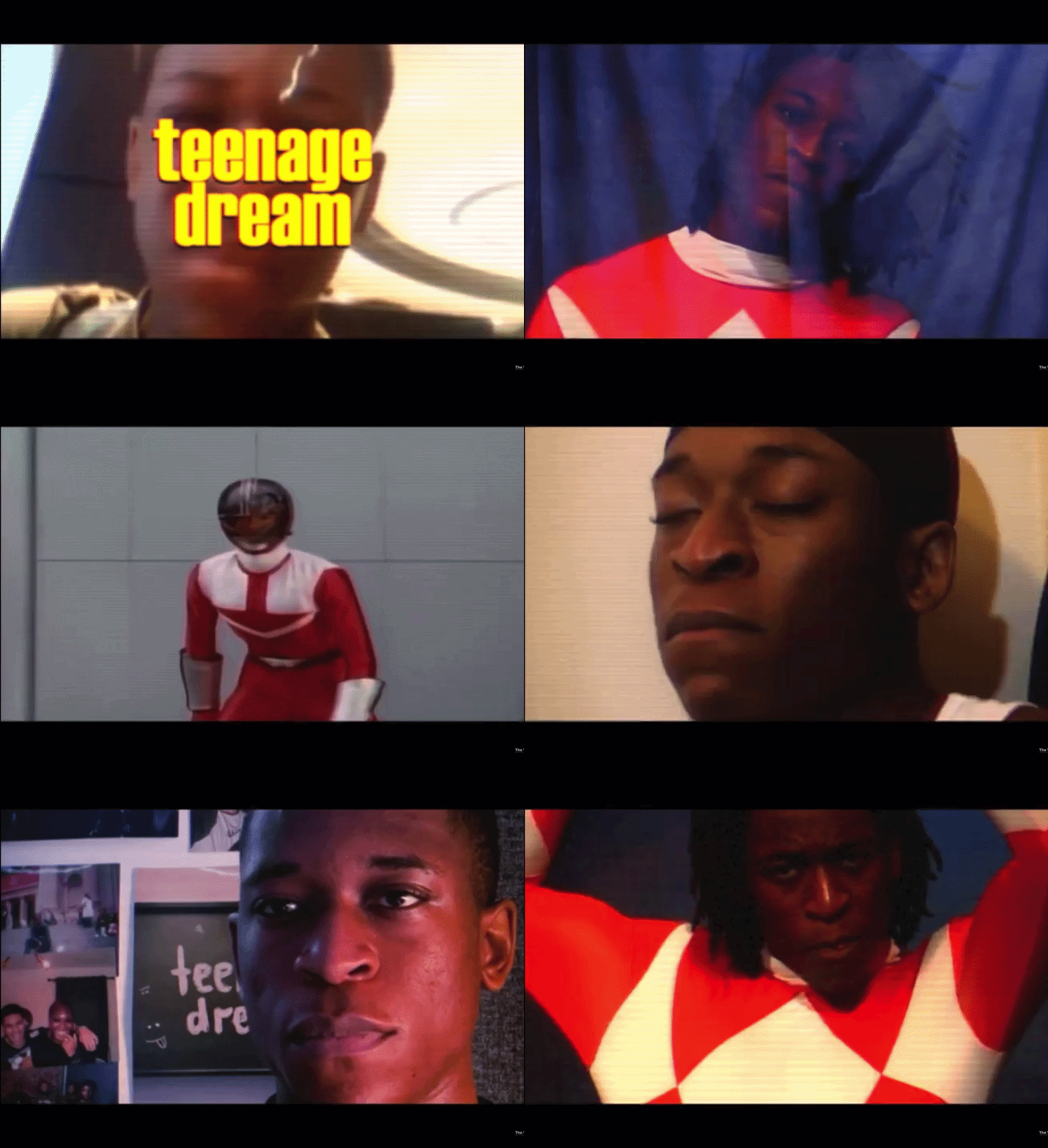
teenage dream: The First Wall brought to by The Void Incorporated is an immersion into the fantasy itself. It entertains delusion, excess and the intoxicating promise that through belief, ambition and performance one could become the greatest thing since Sliced Bread. It inhabits the teenage dream without yet asking where it came from.
The Void Incorporated grew out of teenage dream: the series (2024–25), SAINT’s original autobiographical series documenting his transition into adulthood through memory, history, culture and the lingering idea of a “teenage dream.” Where the original series followed SAINT as he attempted to understand what that dream meant to him, The Void Incorporated asks what would happen if he could actually live inside it.
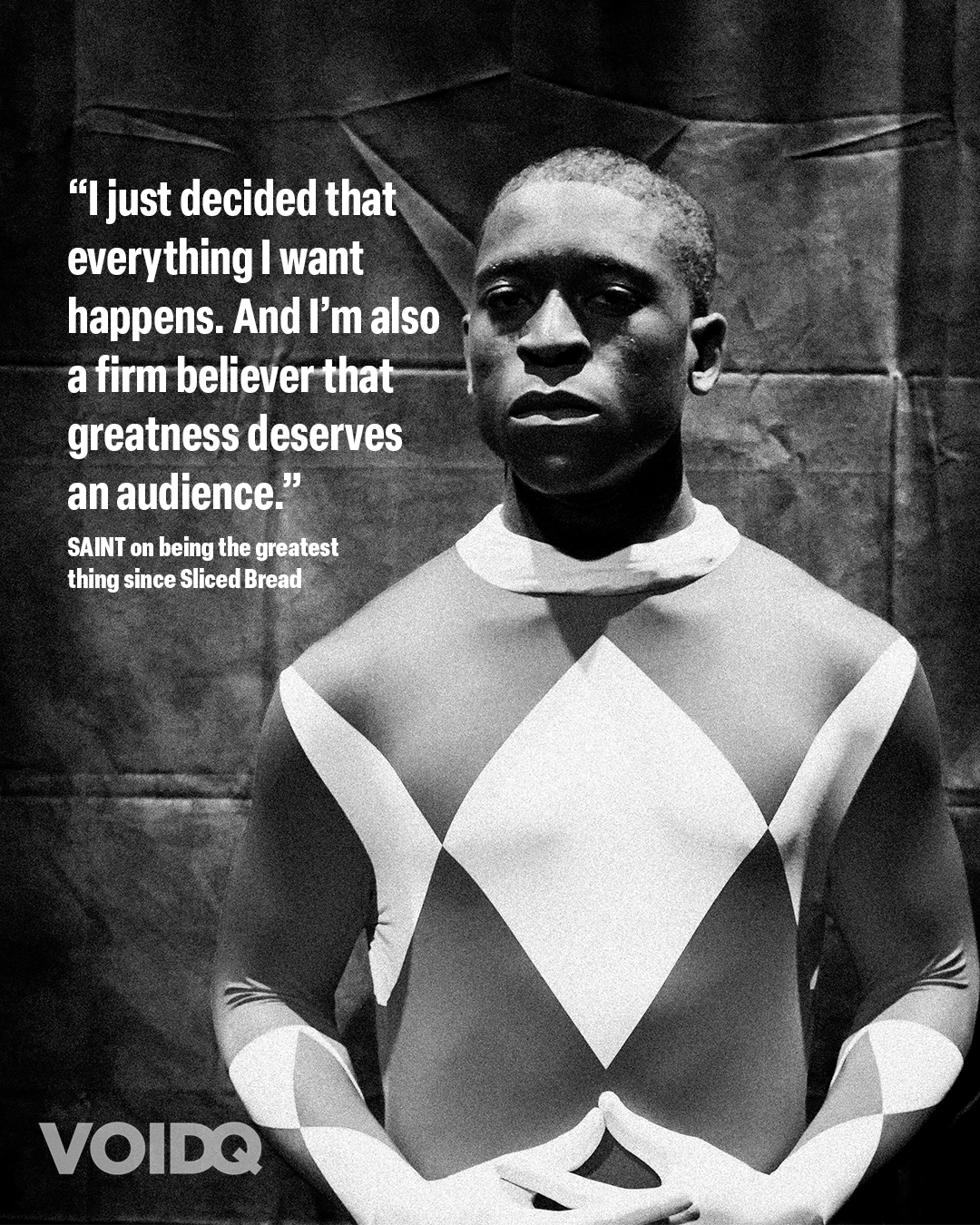
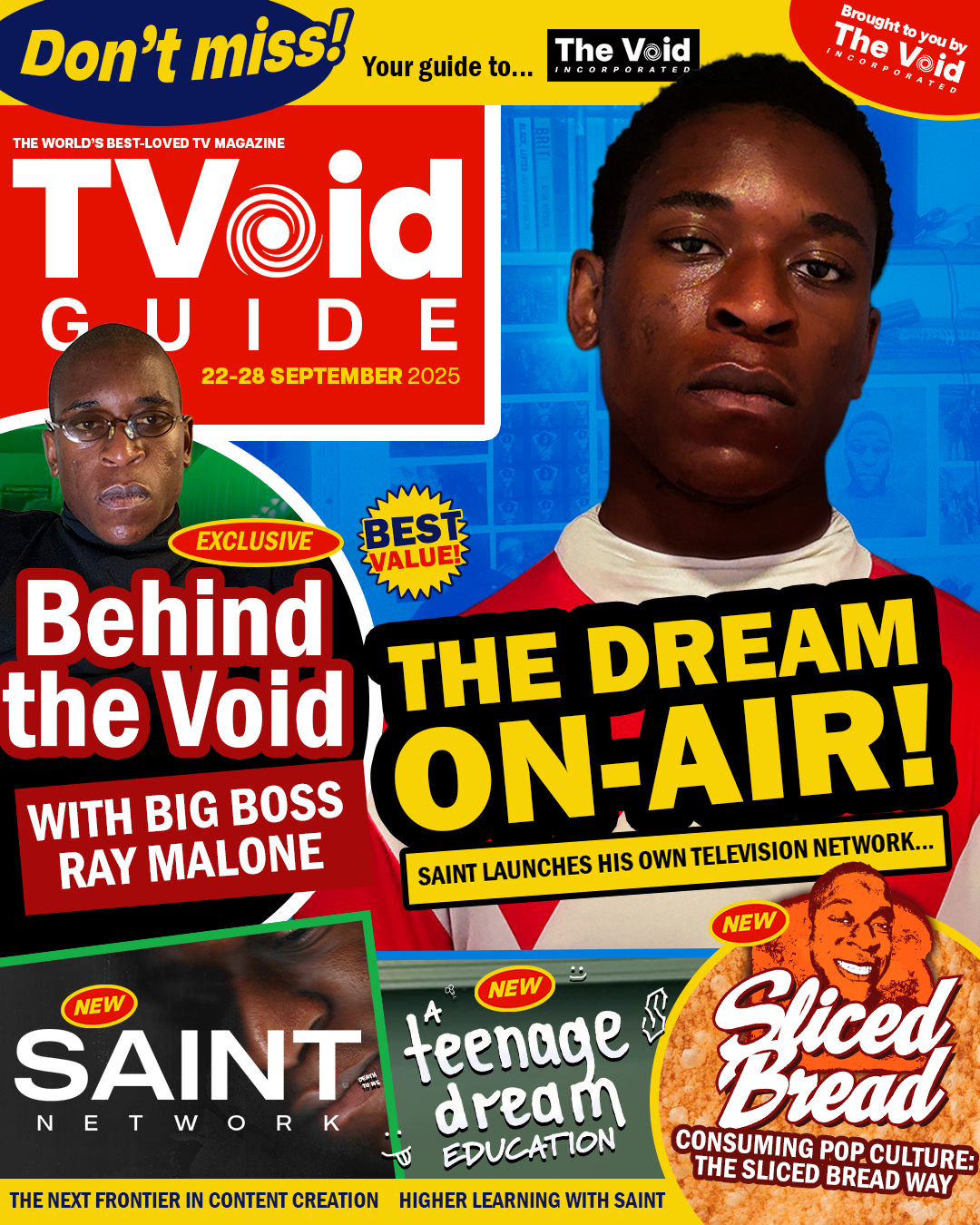
The project begins from a simple proposition: what if the teenage dream could be made real? Through The Void Incorporated - both the title of the project and the fictional company operating within it - SAINT’s aspirations, memories and ideas of celebrity are given real-world form. The imagined magazine covers are published, the interviews take place, documentaries are made, television appearances are staged and an entire media ecosystem begins to materialise around him. The act of producing the project therefore becomes inseparable from its narrative: making the fantasy is how the fantasy happens.
But beneath the spectacle is the distance between the person SAINT is and the person he has spent years imagining he might become. Fame, acclaim and creative success offer more than recognition; they hold the promise of arrival - of finally becoming extraordinary enough to resemble the person he once dreamed about. The Void Incorporated takes that promise seriously. Rather than dismissing the fantasy as delusion, the project follows it to its logical conclusion, allowing SAINT to construct the world, image and mythology he once believed might be waiting for him. It is somewhere within the distance between these two selves - between the person and the possibility - that the Void begins to emerge.
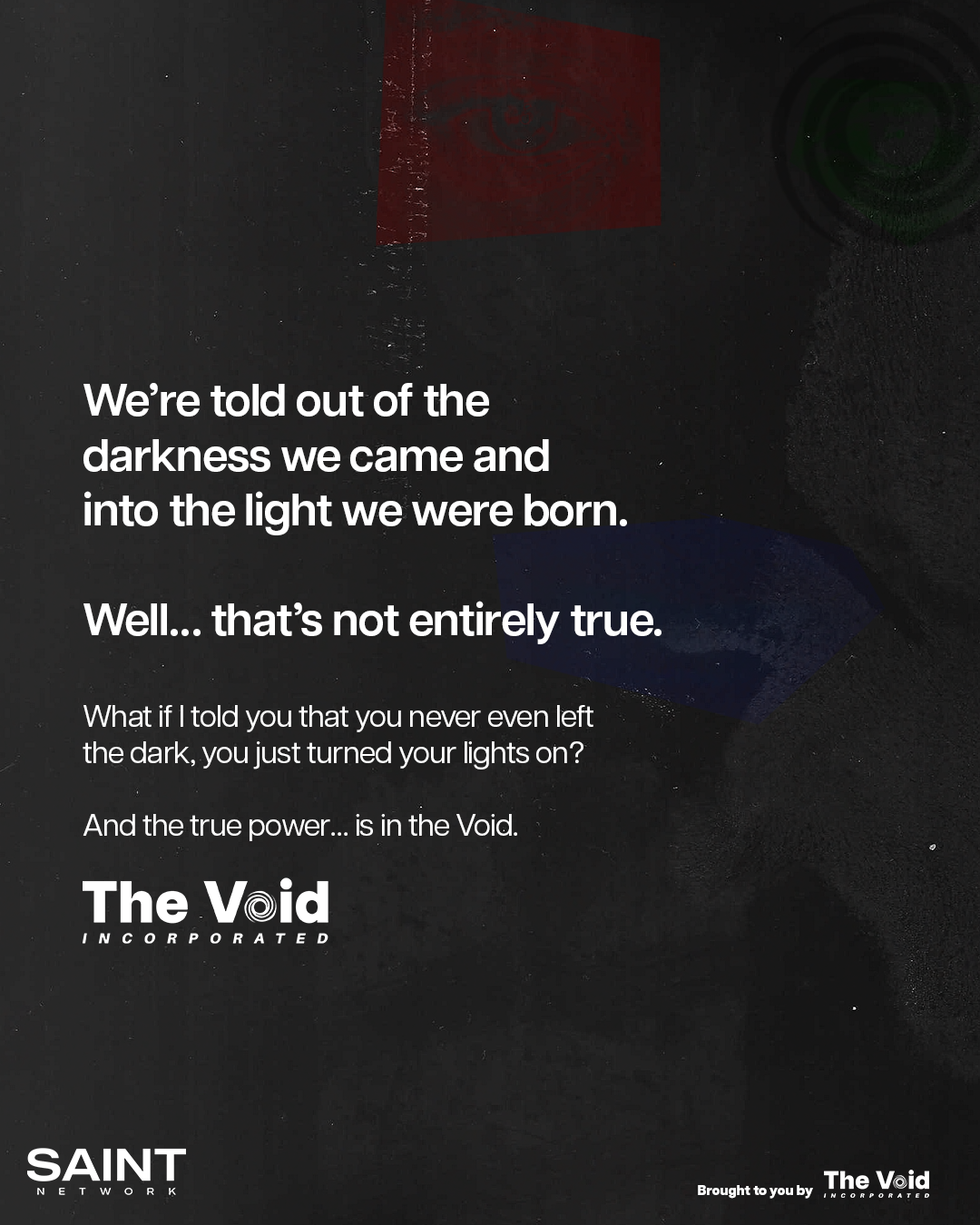
If post-war social change and the globalisation of culture gave birth to the teenager, then the rise of mass media between the 1980s and the Y2K was where this cultural innovation came of age. Through mass media and popular culture, ideas of self-transformation and optimisation became globally imaginable. For the first time, millions of people could not only witness extraordinary lives but imagine themselves living them.
This premise has never simply been “believe and you’ll become a star”, it is “believe, work, preserve and your dreams can come true”. This is more than the notion in James 2:17 of “faith without works is dead. It is the teenage dream: a globalised mutation of the American Dream, which through mass media, popular culture and celebrity has produced a new modern secular gospel.
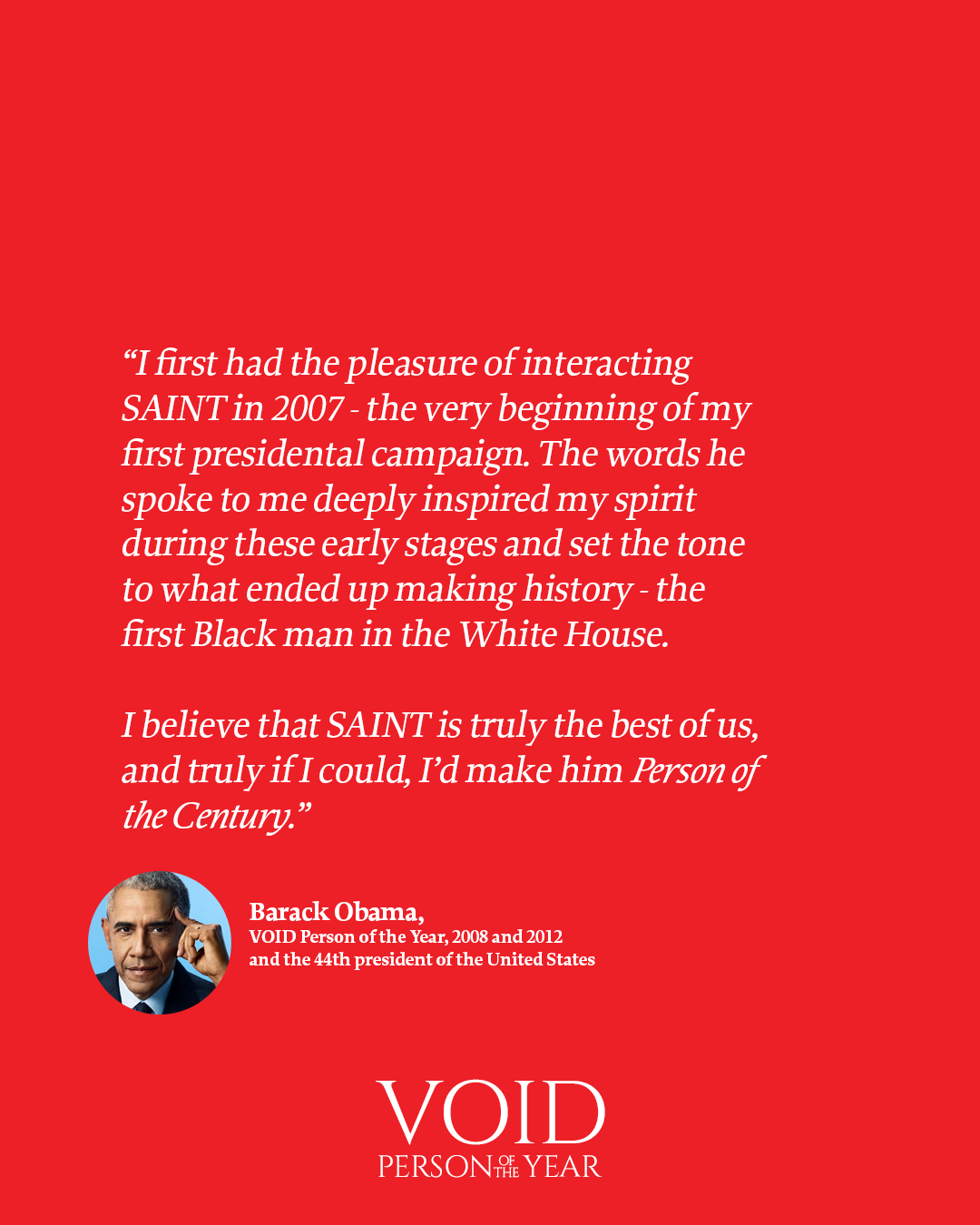
The First Wall therefore unfolds less as a conventional television series than as a continuous broadcast. Its story is scattered across films, social media, fictional interviews, magazine covers, advertisements, documentaries, press appearances and television programming, with each new piece of media extending the reality of SAINT’s dream. Together, these broadcasts become an ongoing act of self-mythologising: memories are reframed, ambitions become narratives and imagined versions of SAINT begin to acquire material form. Some elements remain fiction; others escape it entirely, becoming real publications, interviews, films, events and cultural artefacts produced through the making of the project itself. Rather than simply depicting SAINT’s rise to fame, The Void Incorporated produces the culture surrounding it, allowing the mythology of SAINT to accumulate in real time.

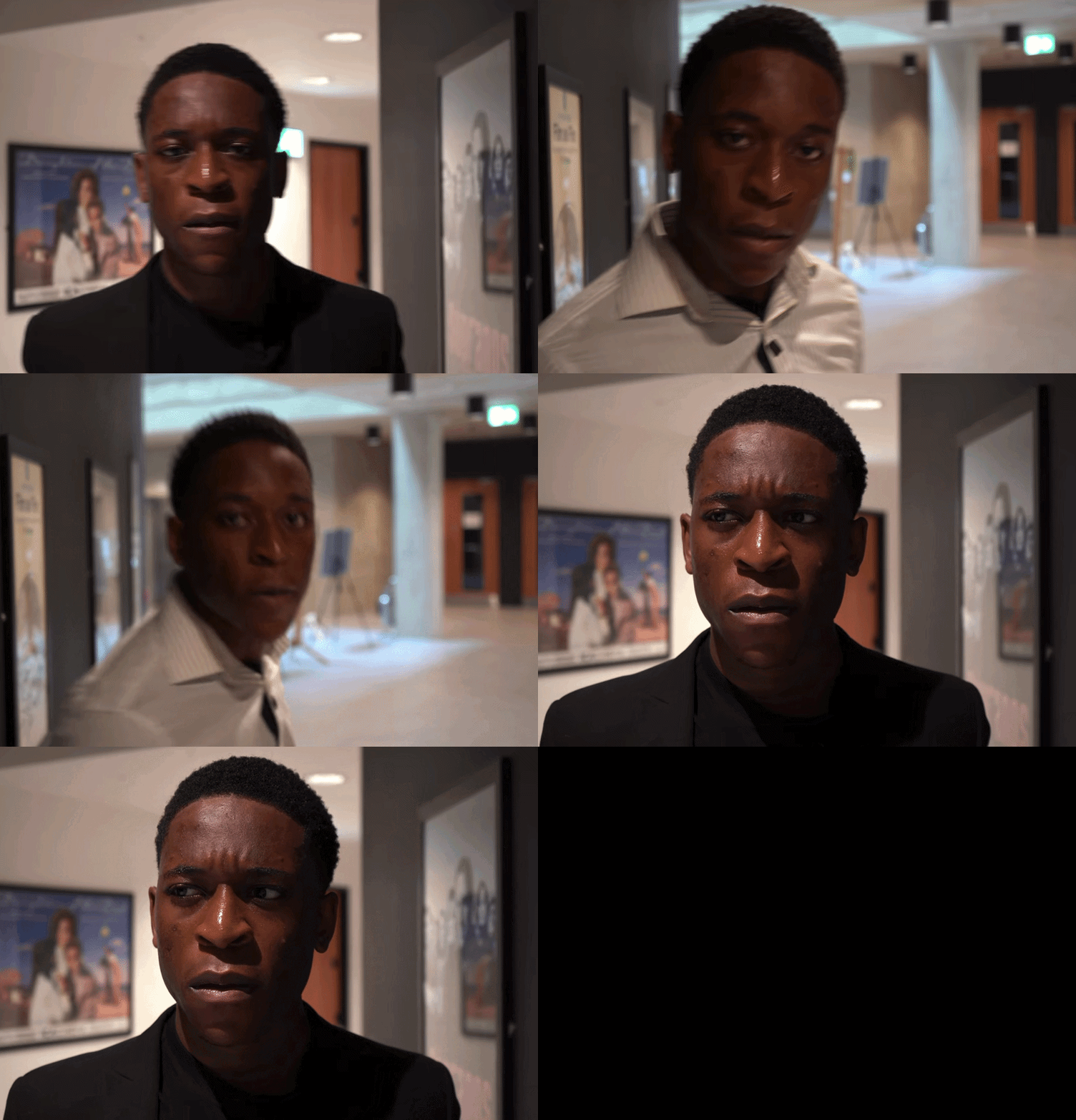
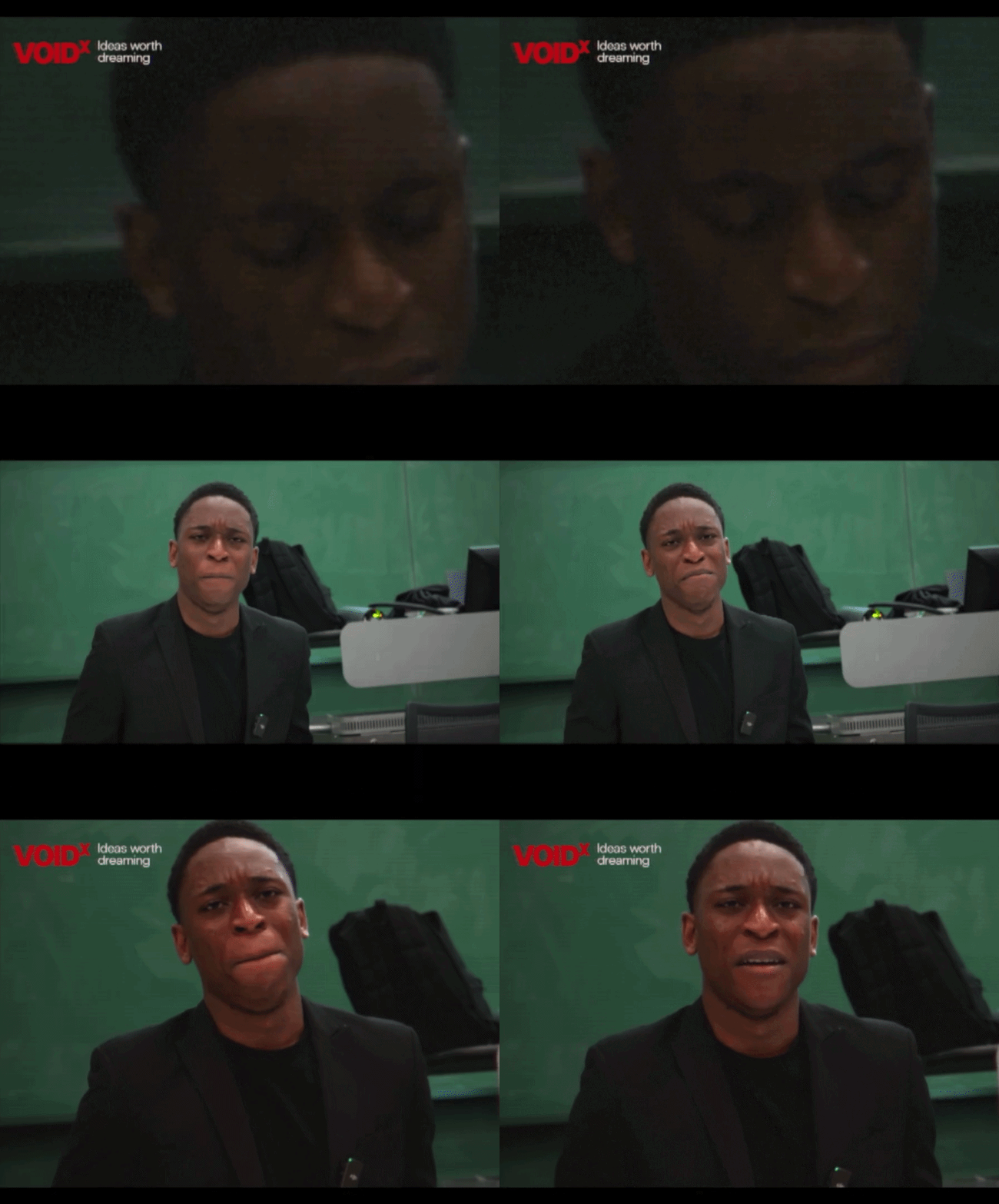
If post-war social change and the globalisation of culture gave birth to the teenager, then the rise of mass media between the 1980s and the Y2K was where this cultural innovation came of age. Through mass media and popular culture, ideas of self-transformation and optimisation became globally imaginable. For the first time, millions of people could not only witness extraordinary lives but imagine themselves living them.
This premise has never simply been “believe and you’ll become a star”, it is “believe, work, preserve and your dreams can come true”. This is more than the notion in James 2:17 of “faith without works is dead. It is the teenage dream: a globalised mutation of the American Dream, which through mass media, popular culture and celebrity has produced a new modern secular gospel.
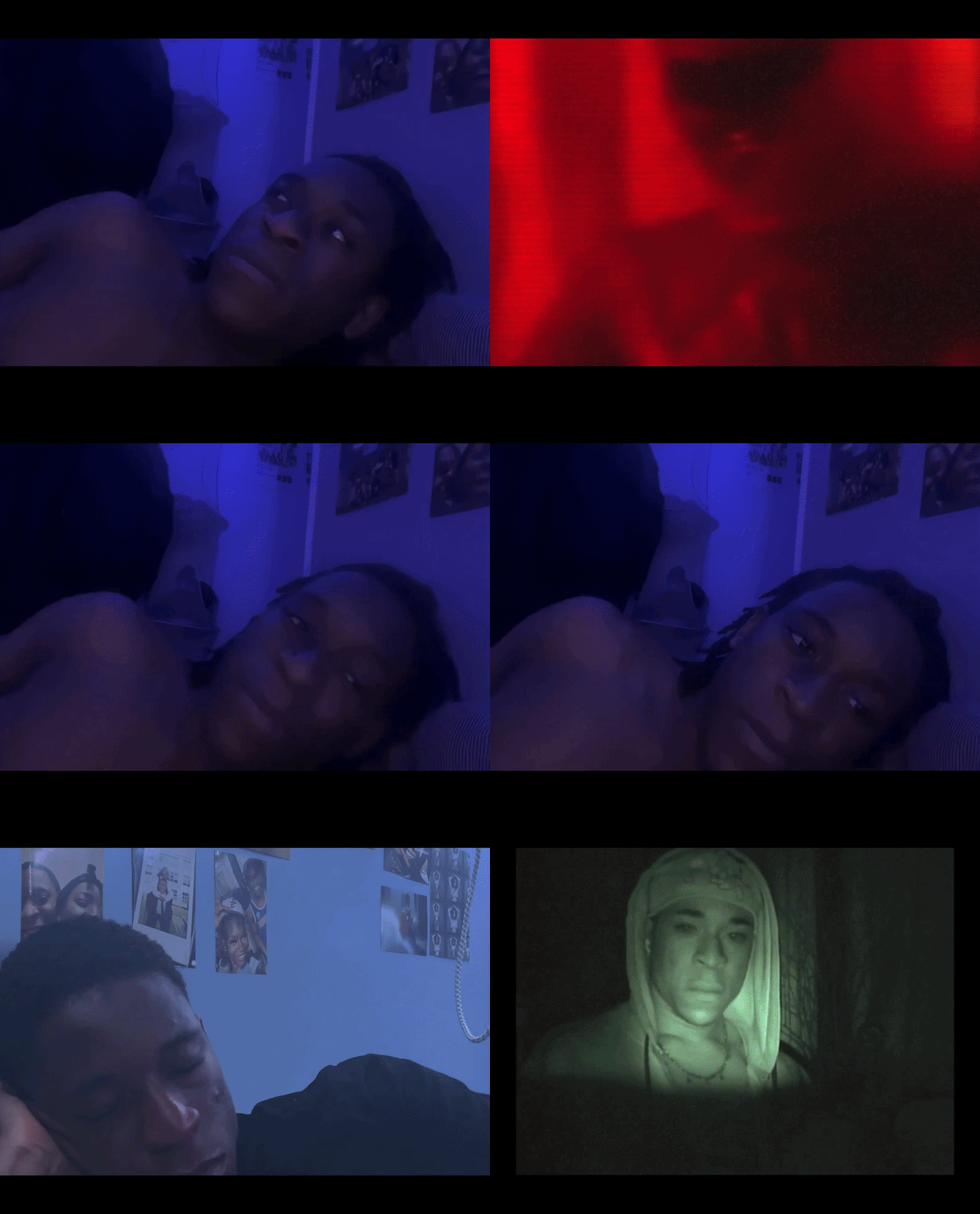
But the broadcast is never entirely stable. Signals drop out, transmissions are interrupted, images distort and fragments of other realities bleed into the programme. Signal failure does not necessarily mean the fantasy is collapsing; sometimes it is the means through which something the fantasy has been constructed to avoid manages to get through.
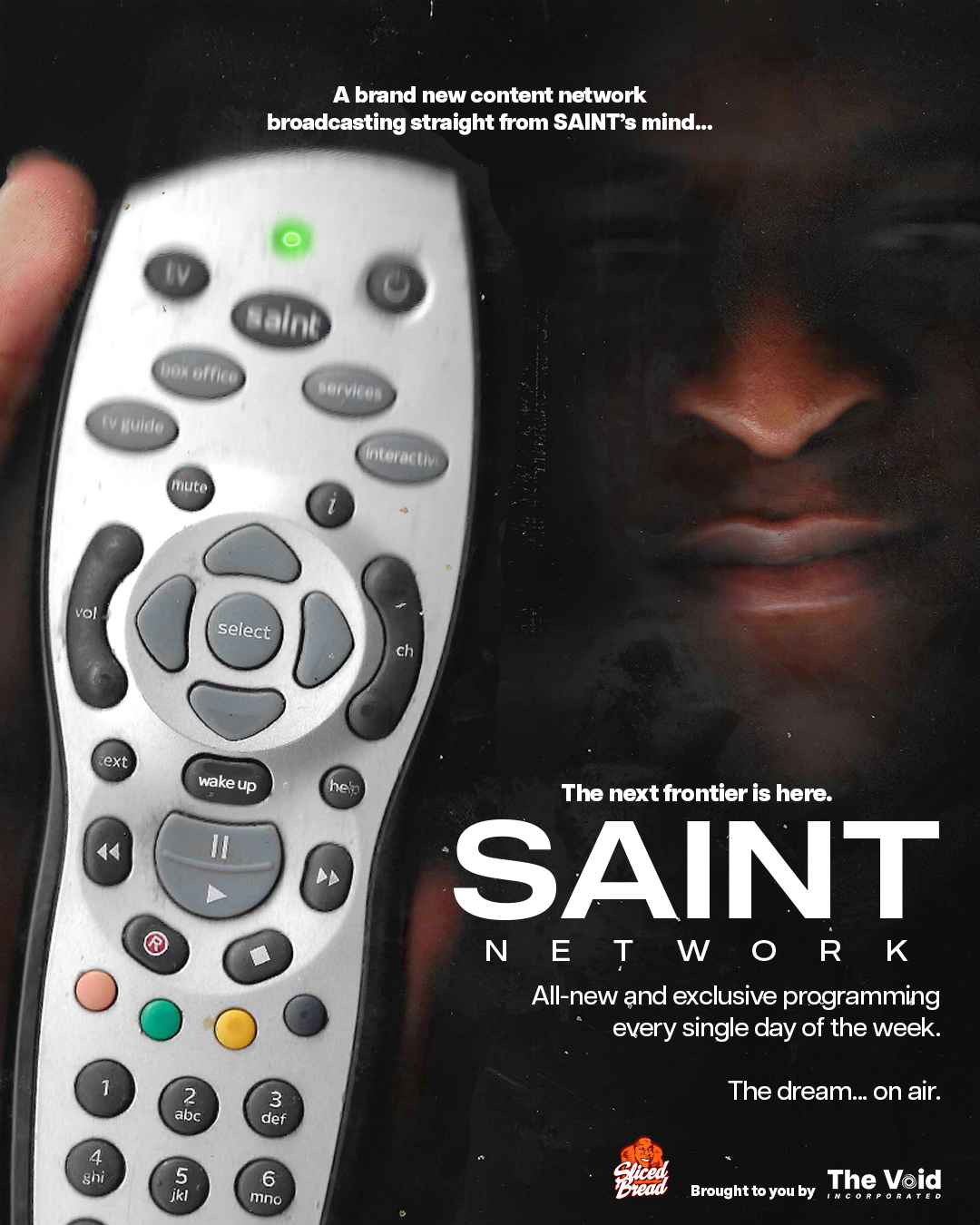
As the First Wall progresses, these disruptions begin to expose a tension at the centre of the Teenage Dream. While SAINT understands the dream through grandeur - fame, recognition, cultural importance and the promise of becoming extraordinary - it repeatedly returns him to memory, childhood and the emotional realities from which those ambitions emerged. The further SAINT reaches towards the future he imagines, the more insistently the past seems to travel with him. The spectacle of the First Wall therefore functions as both manifestation and defence. SAINT succeeds in creating increasingly elaborate expressions of himself: magazine covers, documentaries, interviews, imagined accolades and eventually the SAINT Network, an entire media ecosystem capable of broadcasting his inner world.
The spectacle of the First Wall therefore functions as both manifestation and defence. SAINT succeeds in creating increasingly elaborate expressions of himself: magazine covers, documentaries, interviews, imagined accolades and eventually the SAINT Network, an entire media ecosystem capable of broadcasting his inner world. Each new transmission makes another part of the Teenage Dream real, fulfilling the intoxicating promise that SAINT might become the greatest thing since Sliced Bread. Yet the expansion of that ecosystem also creates greater distance between the scale of what SAINT believes he must become and the emotional need driving him to become it.
That distance is the Void: an absence that becomes generative precisely because SAINT is continually attempting to overcome it. Rather than satisfying the need beneath the Teenage Dream, each new expression of grandeur gives that need another form through which to reproduce itself. The Void therefore exists as both lack and possibility - the feeling that something is missing and the conviction that one more achievement, transformation or manifestation might finally provide it. But the same force that propels SAINT towards an imagined future also carries with it everything that future has been constructed against. Memories, fears, desires and earlier versions of himself continue to surface, as though the parts of SAINT excluded from the fantasy refuse to remain outside it.
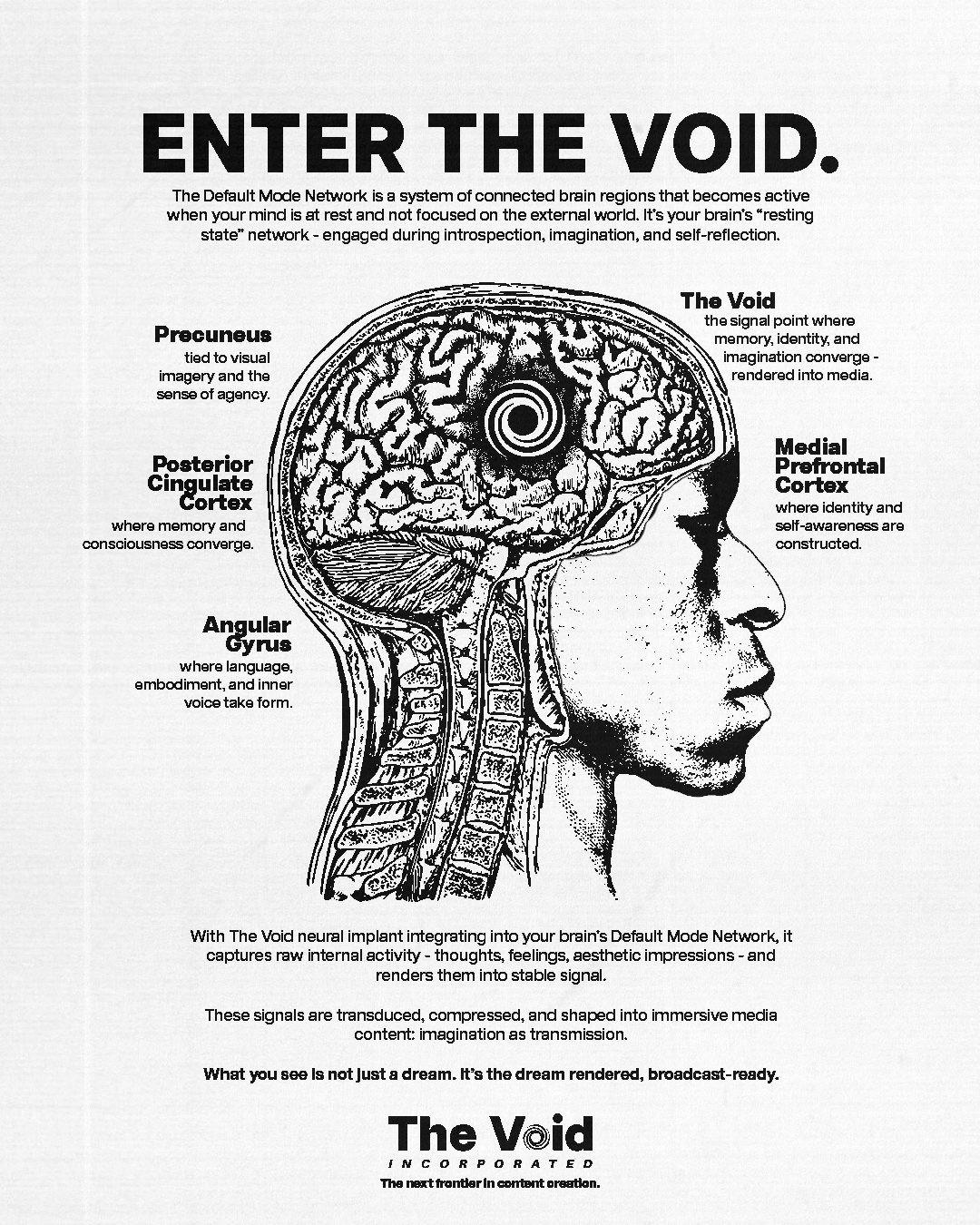
The Void Incorporated is the largest of these structures: a mysterious organisation capable of taking what exists internally and giving it external form. Somewhere between production company, technological system and unseen author, it converts the contents of SAINT’s inner world into media. Memories become documentaries, fantasies become programmes, ambitions become headlines and imagined futures begin to appear in the present. Its experimental neural-broadcast technology literalises one of the project’s central ideas - that media is a reconfiguration of memory - by making SAINT’s interiority something that can be produced, programmed and watched.
At its centre is Ray Malone, the enigmatic figure through whom SAINT encounters The Void Incorporated most directly. Part executive, part mentor and increasingly paternal presence, Ray provides a human face for a system capable of seeing potential in SAINT that he cannot always recognise in himself. Through their relationship, the project’s questions of ambition and self-creation become entangled with authority, recognition and the desire to be seen by someone capable of affirming that what lies within SAINT is worth bringing into the world.
But as The Void Incorporated succeeds in making more and more of the Teenage Dream real, the experiment begins to expose a contradiction it cannot resolve through production alone. The distance between fantasy and reality grows smaller while the emotional need that produced the fantasy remains. The dream can become a magazine, a documentary, a headline, a television network; SAINT can continue finding new forms through which to make himself visible. What remains uncertain is what he expects that visibility to finally prove. If SAINT can make his teenage dream real, what exactly did he expect to happen once it came true?