
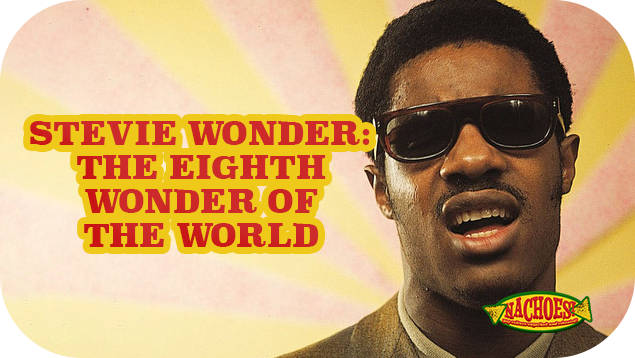

Nachoes!: Stevie: The Eighth Wonder of the World
Stevie: The Eighth Wonder of the World traces the making of Stevie Wonder’s legendary Classic Period - from the child prodigy raised inside the Motown machine to the artist who transformed the possibilities of popular music. Across nine episodes, the series follows the people, technology and records that shaped his evolution, culminating in the monumental Songs in the Key of Life (1976).
Episodes
Before the Classic Period, Stevie Wonder was Motown’s child prodigy. From “Fingertips” to “Uptight (Everything’s Alright),” the story of how Stevie grew up inside the Motown machine - and approached the 21st birthday that would change everything.Before Stevie Wonder could reinvent himself, Marvin Gaye changed Motown first. A retrospective on What’s Going On (1971), the album that expanded what a Motown artist - and the album itself - could be.Stevie Wonder’s first major attempt to define himself on his own terms. Made with Syreeta Wright and in the shadow of What’s Going On, Where I’m Coming From (1971) isn’t quite the beginning of his Classic Period - but it points directly towards it.How Malcolm Cecil and Robert Margouleff built TONTO, the enormous synthesiser system behind Zero Time (1971) - and found the young Stevie Wonder who would use it to transform his sound.Armed with TONTO and newfound creative freedom, Stevie Wonder enters his Classic Period with Music of My Mind (1972): a progressive soul record built largely from the imagination of one musician.This is where Stevie Wonder becomes Stevie Wonder. With Talking Book (1972), he takes the experimentation of Music of My Mind and breaks open the possibilities of popular music, creating something radical that can also sound effortless.Stevie turns outward. From “Living for the City” to the album’s wider social critique, Innervisions (1973) takes his music somewhere darker and more cerebral - and earns him his first Grammy for Album of the Year.After surviving a near-fatal car crash, Stevie Wonder makes the strangest album of his Classic Period. A quieter, more peculiar record whose introspection would echo through generations of alternative R&B.The grand finale. Stevie leaves TONTO behind and opens his music outward, bringing together a vast community of musicians for an album that feels like a summation of his Classic Period - and of the Black musical traditions that made it possible.