Has intersectionality reached its limit?
Are there advantages to analysing racism separately from sexism?
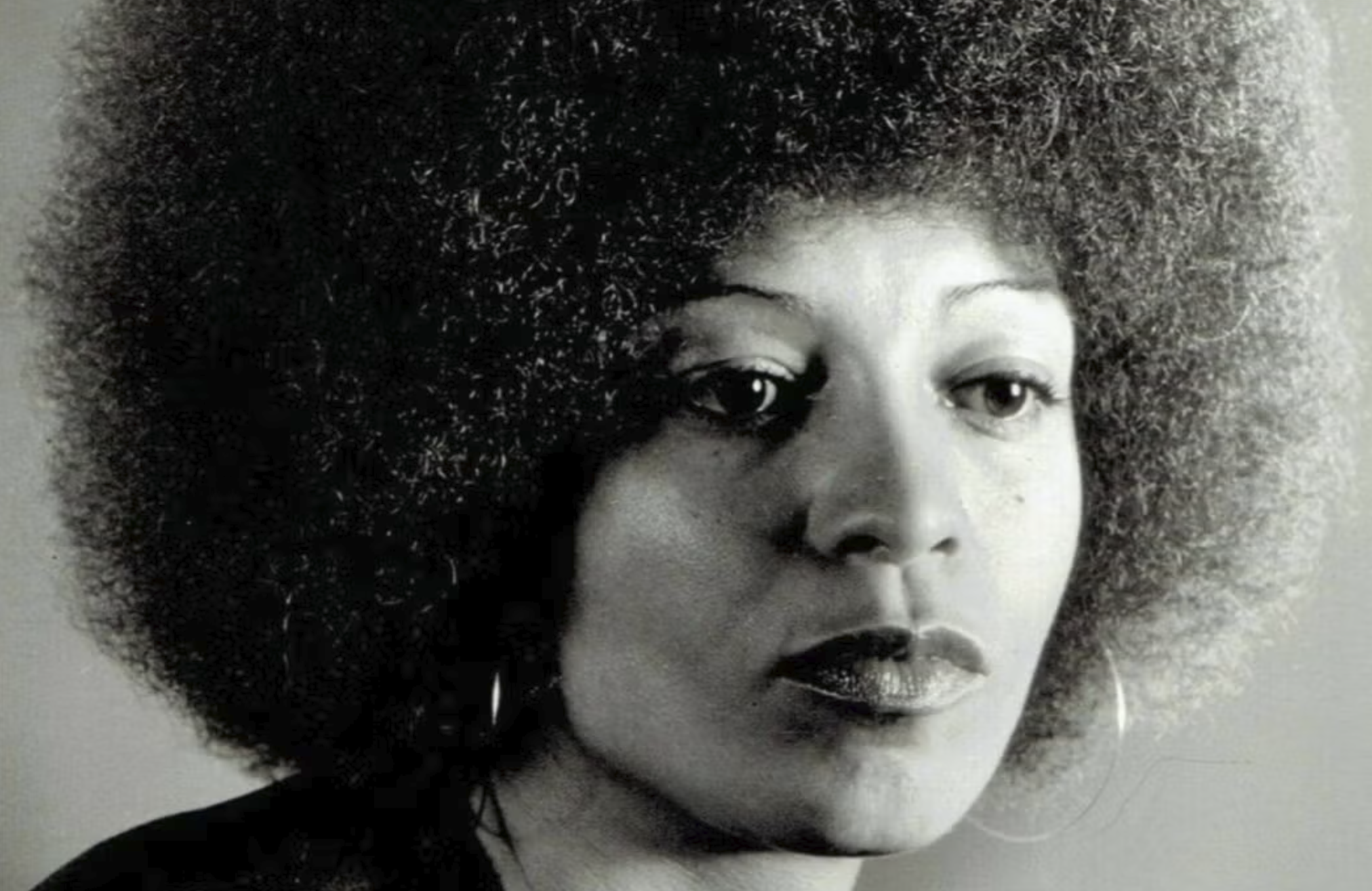
When intersectionality falters, Davis’ integrative vision still holds. This essay explores why.
There are no advantages in analysing racism separately from racism. In fact, there is a real danger to it. This is a reductive view can ignore the full comprehensive nature of the horror which was the Western colonial project. The desire to explore what the question asks is rooted in an ignorance and privilege that continues a culture of misogynoir which only seeks to invalidate the experiences of Black women without having a legitimate concern for the comprehensive history and nature of oppression. Nor is there a legitimate reason rooted in a true desire for intuitive social justice to why one might call for analysis of racism separately from sexism.
In seeking to stay within the parameters of the questions, the essay will not explore in depth how gender and race having acted in tandem with each other in how racialized experiences exist in the West, but it is essential to recognize that these categories have been historically intertwined, shaping the nuances of social hierarchies in the West. Hortense Spillers explores this in “Mama's Baby, Papa's Maybe”, where both the African male and female flesh is subjected through a phenomenon of “gendering/ungendering” which acts as a systematic denial of cultural and metaphysical identity and agency, thrusting both Black men and women into a liminal space, stripped from the traditional gender markers which would legitimatize their human status within the socio-political order of the time (Spillers, 1987, p. 68). For the Black male, involves a denial of patriarchal status and a reduction to property, stripping away any gendered power and agency. The Black female individual experiences a literal and symbolic rape through continued internal violation reinforced through targeted acts of cruelty and forced submission. Historically, we can see that gender has served as a crucial axis of exploitation, facilitating the role of the Black body as both an instrument of labour and a receptacle of violence and subjugation. This is central to understanding the complex layers of disenfranchisement that characterize the Black experience.
Spillers refers to Angela Davis in this discussion (pp. 68, 74), due to how her work, most notably in her seminal book "Women, Race, & Class", Davis explores how Black women have been historically positioned at the intersection of race, gender, and class oppression. She tracks the evolution of the women's movement, pointing to its failures to adequately address the concerns of Black women, whose experiences were often markedly different from those of white women due to systemic racism (Davis, 1982). The liberation of Black women is contingent on challenging the configurations of how power is experienced that simultaneously subject them to racial and gendered forms of exploitation and discrimination. This perspective was a precursor to the broader adoption of intersectionality in feminist and a more Black-centred womanist theory and activism.
To begin in critiquing the foundations of the question regarding the separation of analyses for racism and sexism, it’s necessary to engage deeply with the concept of intersectionality. Legal theorist Kimberlé Crenshaw's development of intersectionality was premised on the idea that social categorizations such as race, class, gender, and others do not exist separately from each other but are interwoven on multiple levels (Crenshaw, 1991). She emphasizes that the experiences of Black women, or women of colour more broadly, cannot be captured fully by looking at either racism or sexism in isolation due to the intersectional nature of their lived realities (p. 1242). However, she notes that intersectionality is not about adding up experiences of racism and sexism, but rather about understanding how these structures of oppression interconnect and shape the conditions of women of colour in particular ways (p. 1244). Though its inception is rightfully duly credited to Crenshaw, Angela Davis provided the groundwork upon which the framework of intersectionality was built. By illuminating how overlapping systems of oppression, such as racism and sexism, uniquely impact the lives of Black women and other women of colour; Davis's work has shown that these intersecting oppressions cannot be understood or dismantled through a single-axis framework that examines racism and sexism as isolated entities. Instead, her analysis, particularly of the prison-industrial complex and the labour market, emphasizes the need to consider the interlocking nature of these dynamics.
However, intersectionality’s presence in mainstream socio-political discourse and academia has had a ballooning effect, with even Crenshaw expressing a disheartened concern for what she perceives as its dilution (Steinmetz, 2020). The issue with what can be defined as an additive approach to intersectionality is that it struggles to accurately assess the various forms of oppression and their impacts. Additive intersectionality seeks to conceptualize various forms of oppression as if they are separate entities that simply stack or add up on top of one another. This desire to quantify such experiences fails to capture the nuance of the fact that these systems of oppression are deeply intertwined and cannot be adequately addressed by simply tallying their individual effects.
Such simplification is apparent in Edvina Bešić’s use of the Venn diagram in her article (Bešić, 2020, p. 116), which advocates for by applying the principles of intersectionality in inclusive education to consider a multitude of student identities and needs, rather than exclusively focusing on children with disabilities (Bešić, 2020). The use of the Venn diagram seeks to operate on the basis that it can be simple yet powerful, particularly in educational settings, in introducing the concept of intersectionality to those unfamiliar with it. By visualizing different identity categories as distinct but overlapping circles, individuals are not defined by a single characteristic, but rather by the combination of various factors that intersect and shape their experiences. However, it’s erroneous for Bešić, as an educator in Austria (where Black people make up less than 1% of the population), to suggest that the use of intersectional analysis can exist in a way that might not fully reflect the complexity and specificity of each individual intersections, particularly race which the original context proposed by Crenshaw and even by Davis were heavily informed by the context of their Black womanhood.
This tendency towards simplification, as demonstrated in Bešić’s article, is indicative of a wider pattern within mainstream cultural and political consciousness where scholars and the general public lean into additive intersectionality, as noted by Christoffersen and Emejulu (Christoffersen & Emejulu, 2023). An additive approach can create alignment with the notion that there could be some advantage to analysing racism separately from sexism; in dissecting the two, we could address each with heightened focus and precision. This perspective is reflective of a broader trend in which complex social phenomena are reduced to more manageable, isolated issues. Christoffersen and Emejulu explore this in how they critique texts that propagate additive intersectionality, specifically Walby, Armstrong, and Strid’s “Intersectionality: Multiple inequalities in social theory”, published in 2012. Specifically, they take issue with the way in which Walby, Armstrong, and Strid position their "mutually shaping" model as an alternative to what they perceive as the more fluid and overlapping framework of intersectionality. Christoffersen and Emejulu argue this model restrict our understanding of how systemic oppressions inform and transform one another, aiding in supporting a more static conception of social categories. In doing so, they suggest that Walby, Armstrong, and Strid inadvertently uphold the very structures of division and hierarchy they aim to critique (Christoffersen & Emejulu, 2023).
Ann Garry examines the effectiveness and limitations of these metaphors in conveying the core tenets of how intersectionality existed in the minds and praxis of core thinkers like Crenshaw and Davis (Garry, 2012). She focuses her critique on more dynamic traffic intersection and roundabout metaphors, however her labelling the Venn diagram metaphor “sterile” is an apt way to describe the metaphor which is commonly used is in discussions of intersectionality, particularly as an introductory context (p. 502), as illustrated by Bešić’s misguided use. Whilst there is space to critically examine the traffic intersection and roundabout metaphors, in not pointing the larger limitations and the implications of the use of the Venn diagram, such an omission might contribute to a superficial grasp of the concept in mainstream discourse which hinders the way intersectionality can truly be and feel liberatory.
Another issue created through an additive or simplified understanding is the division of experiences into isolated categories. This division creates the problematic assumption that the aim is to achieve individual or collective liberation solely for a particular identity intersection. An example of this is felt is the emergence of the All Lives Matter slogan in response to the Black Lives Matter movement. Unlike BLM, which rose from a recognition of specific systematic injustices and violence faced by Black individuals, the All Lives Matter slogan is rooted in the logic that believing that only Black lives matter takes away from other lives, regarding them as less important.
Intersectional thought can appear to aid in the belief that progressive movements seem only motivated of being representative of the group it is advocating. Arguably, particularly in how additive approaches create the illusion that intersectionality wishes to fragment our identities to a point where they are seen as entirely separate battles in the fight against oppression. However, this isn’t something that would be remedied in seeking to analyse racism and sexism, nor does it reflect the history of movements calling for the advancement and liberation of marginalized identities based on race. In fact, these issues have only been furthered by seeing to demarcate and compartmentalize struggles along strict lines of identity, rather than embracing the full complexity of how these identities intersect. This illustrates a jarring deviation from how Crenshaw envisioned intersectionality operating, particularly separated from the original legal context it was conceived under (Crenshaw, 1989).
Unlike racism, which evolved as an instrument of imperial violence, intersectionality emerged from practical action and advocacy. Using 1976’s DeGraffenreid v. General Motors as a pivotal case, Kimberlé Crenshaw critiques the binary approach to discrimination, highlighting that the legal framework of the time failed to consider the compounded discrimination faced by Black women (p. 141). The court’s decision to dismiss the combined race and sex discrimination claim lodged by the Black female plaintiffs exemplified the inherent limitations of addressing complex social issues like discrimination through a single-axis lens, which fails to consider the interwoven nature of multiple forms of oppression. Calling for the analysis of racism separate from sexism is an intentional dismissal of the complex reality that many individuals face oppression along multiple axes. When social reality has historically depended on the silence of those who have been marginalized, ignoring the compounding effect of racism and sexism only perpetuates that silence.
Similarly, Angela Davis pioneered what can be understood as an integrative approach (Barnett, 2003) to the complexities of social identities and oppression, which became foundational in intersectionality theory. Her expression of this mode of thinking helped form a path to a comprehensive perspective on how interconnected systems of oppression affect individuals, especially for Black women. Like other modes of social theory which seeks to better protect and articulate reality for marginalised classes like the Black woman, it was Angela Davis’ experiences which exist as part of a historical sequence of struggle and resistance that informed her thought.
Davis emerged as a significant activist during the 1960s as a leader of the Communist Party USA and had close relations with the Black Panther Party through her involvement in the civil rights movement. Her personal intersects at many points with her political work and activism and they further illustrate the disservice which is done in separating racism and sexism – as such an approach is arguably a factor in the decline and destabilization of the civil rights movement post its initial successes.
This is unpacked by Davis in her 1974 autobiography, specifically in the fourth chapter “Flames”, which captures the organisational and ideological qualms which arose within sects in the movement (Davis, 1988). Whilst there is a rampant sense of sexism (which can now be understood as misogynoir), Davis in recounting discourse which took place at the 1967 Black Youth Conference, rearticulates a principle made by James Forman (p. 160). Singularly doing a skin analysis of the Black Western plight is “theoretically incorrect” (Forman, 1967, p. 6). Flaws present themselves in a purely skin analysis in how it limits what Black progressive reality can be, as it veers into a redundant sense of nationalism. This can be illustrated with the pitfalls of certain Black organisations with a separatist politic, like the Nation of Islam, where even one of its de facto representatives Malcolm X shifted towards a more integrative and internationalist approach at the later part of his political career and life. In a single-axis analysis, it also flattens the extensively nuanced tapestry in which The Middle Passage was established under - in tandem with class structures which existed in Africa, acting as a part of a broader historical narrative of oppression, going beyond identity markers like race.
Davis’s own analysis extends this argument; like Forman and formative scholar Frantz Fanon, she adopts a Marxist framework in the struggle is not just against one axis of identity but against a complex matrix of domination where these various elements reinforce one another. Davis gravitated to Marxism and communism as a part of her personal and intellectual evolution influenced by her identity, experiences and education. From a young age, Davis was predisposed to engaging with social justice movements, shown by her interaction with the 1963 Birmingham church bombing. At age 19, this personal loss was deeply felt, and it prompted her to contemplate the systemic nature of racism and violence in American society, condemning the whole “ruling stratum” for the murder of the four young girls (Davis, 1988, p. 131). While in high school, she was introduced to Marxist-Leninist ideology through a scholarship from the American Friends Service Committee, which allowed her to complete her education in New York at the private Greenwich Village Elizabeth Irwin High School. There, she joined a socialist youth club named Advance, and engaged in intellectual discussions whilst first reading The Communist Manifesto (p. 111). Her intellectual development was further significantly shaped during her tenure at Brandeis University, where she studied under Herbert Marcuse, a leading figure in German philosophy renowned for his critical theory and Marxist scholarship.
What Marxism allowed Davis to do is see through imagining the liberation of the proletariat, liberation for all is possible (p. 110). This is something that concepts intrinsically and singularly examining race as part and cause of the Black plight have not been able to accomplish independently. Much of this is due to how they depend on Western definitions of constructions to underpin how the liberation of and from the Black struggle is imagined. Marcus Garvey’s reclaiming of agency and autonomy through economic independence, cultural pride, and the establishment of a unified African state abandons the reality of vastly heterogeneous Africa for a simplified vision that inadvertently utilizes Western frameworks like state-centrism and capitalist principles in its conceptualization of liberation. Booker T. Washington's imagination, emphasizing vocational training and economic self-help at the expense of civil rights and higher education, also reflect a measured acceptance to the powers of the Western hegemony. Even staunch critic of Washington’s, W.E.B DuBois’ imagination of an elite Black ruling class – The Talented Tenth – reinforces a sense of elitism and class stratification central to the continued suffering of the Black populace. It was only through the later application of Marxist ideas into his analysis of race and class, reflecting his growing belief in Marxism as a framework for understanding and combating racial oppression within the capitalist system. This isn’t possible without exploring oppression from multiple axes that intersect with the racial reality of the Black experience. Du Bois’ eventual pivot towards Marxism indicated his recognition that race and class oppression were intertwined, and that addressing one without the other was insufficient for achieving true emancipation. Marxism provided the tools to dissect the layers of oppression and recognize the collective struggle against the capitalist structures that upheld racial inequalities. Within the civil rights movement, as noted by both Davis (p. 150) and Forman (Forman, 1967, p. 7), there was an apprehension to accept Marxism due to it being a “white” theory. This mentality only limits the scope of struggle and fails to recognize the potential universality that a multiple-axis analysis can have. This is also denounced when we call for the analysis of racism separately from sexism.
For Davis, the multifaceted realms of oppression that exist for the Black woman act as evidence of this. Incorporating her mentor Herbert Marcuse's interpretation of Marxism and the concept of the Great Refusal, Davis emphasizes a tradition of radical activism that stands against all forms of injustice and repression (Lamas, 2020, p. 411). The Great Refusal, as Marcuse interprets it, signifies a rejection of the status quo and an embracement of liberation struggles across various marginalized groups. Revolutionary energy is more potent from those outside the traditional working class, from groups that were on the periphery of the capitalist system and the influence of culture industry (Bronner, 2011, p. 90). Davis’ Women, Class and Race is a rigorous examination of the positioning of Black women in Western society to illustrate the nuances and layers of subjugation and disenfranchisement experienced by Black women. In depicting this, this is an invitation in the spirit of Marcuse on how the inattention to the lived realities of Black women means overlooking the chance of a deeper understanding to the systems which impact us all.
In the text, Davis is focused in contextualising the Black female experience as part of the wider women’s’ liberation movement. Chapter 2 and 3, "The Anti-Slavery Movement and the Birth of Women's Rights" and “Class and Race in the Early Women's Rights Campaign” outlines the symbiotic relationship between the anti-slavery movement and the early efforts for women's rights. Women's participation in the abolitionist movement not only contributed to the fight against slavery but also fostered an environment where women could challenge their societal roles and assert their political agency. This engagement led to increased awareness and action against the gender discrimination that women faced, laying the groundwork for the women’s rights movement (Davis, 1982, p. 39). Whilst Davis isn’t that overtly Marxist within the text, the radical Marxian ideas developed by Marcuse present themselves in how Davis is illustrating that liberation is a collective and universal right. In that, a desire to separate and distinguish different modes of oppression only how long the spirit of progression can dwell within a movement. White women, who were advocating for women's suffrage and against sexism and gender discrimination, were nonetheless complicit in racist and capitalist class discrimination towards Black women and men, seeing the Black male struggle as separate from or even antagonistic to the struggle for gender equality… well, equality merely for the white woman (pp. 74-78). Regardless, they inadvertently participate in the maintenance of power structures which perpetuate the same oppressive dynamics they seek to dismantle. This is also evident with how many Black men within the civil rights movement were willing to participate in antiquated gender roles that saw Black women as subordinates rather than as equals in the struggle for liberation (Davis, 1988, p. 161). This was not only a moral failing but a tactical error, as it alienated a powerful constituency within the movement whose full participation was essential for real change.
This is what is frustrating in discourse surrounding intersectionality or what the thought that the question provokes; the emergence of integrative interpretations of oppression are birthed out of survival and at the heart of Davis’ approach - grounded in the radical Marxian offering of mentor Marcuse – is due to the attempt to analyse racism separately from sexism without much regard of those who occupy the intersections of multiple marginalized identities. This is why Black feminist and womanist theory and praxis exist. Without the resistance and consciousness afforded by integrative thinking, striving for liberation becomes a fragmented endeavour - disjointed and unable to recognize the full humanity and diversity of all that can also aid in the pursuit of comprehensive social justice.
Angela Davis’ work pioneers and highlights the importance of combining axes in how we seek to understand oppression, in a way which not only honours but centralizes the lives and struggles of Black women and other groups facing multiple forms of disfranchisement. This is because it’s underpinned by the belief that liberation should be perceivable for all, something single-axis analyses of racism and sexism historically don’t desire to do.
Therefore, analysing racism separately sexism presents a very limited scope and application. Its use was arguably relevant in the Black male and female suffrage movements of the early 20th century and perhaps in the achievement of the Civil Rights Act of 1964, but as in the necessity of Davis and Crenshaw’s work in articulating what has been historically silenced and hidden in the shadows, we see that a non-integrative analysis of such systems is insufficient.
Bibliography
Barnett, B. M., 2003. Angela Davis and Women, Race, & Class: A Pioneer in Integrative RGC Studies. Race, Gender & Class, 10(3), pp. 9-22.
Bešić, E., 2020. Intersectionality: A pathway towards inclusive education?. Viewpoints/ Controversies, Volume 49, pp. 111-122.
Bronner, S. E., 2011. The great refusal. In: Critical Theory: A Very Short Introduction. New York: Oxford Acaemic, pp. 89-99.
Christoffersen, A. & Emejulu, A., 2023. “Diversity Within”: The Problems with “Intersectional” White Feminism in Practice. Social Politics: International Studies in Gender, State & Society, 30(2), pp. 630-653.
Crenshaw, K., 1989. Demarginalizing the Intersection of Race and Sex: A Black Feminist Critique of Antidiscrimination Doctrine, Feminist Theory and Antiracist Politics. University of Chicago Legal Forum, 1989(1), pp. 139-167.
Crenshaw, K., 1991. Mapping the Margins: Intersectionality, Identity Politics, and Violence against Women of Color. Stanford Law Review, 43(6), pp. 1241-1299.
Davis, A., 1982. Women, Race and Class. London: Women's Press.
Davis, A., 1988. Angela Davis: An Autobiography. New York: International Publishers Company, Incorporated.
Forman, J., 1967. James Forman's Speech, Black Youth Conference, November 23, 1967. [Online]
Available at: http://hdl.handle.net/20.500.12322/auc.078:0405
[Accessed 12 April 2024].
Garry, A., 2012. Who Is Included? Intersectionality, Metaphors, and the Multiplicity of Gender. In: S. L. Crasnow & A. M. Superson, eds. Out from the Shadows: Analytical Feminist Contributions to Traditional Philosophy. s.l.:Oxford Academic, pp. 493-530.
Lamas, A. T., 2020. Angela Davis (1944–). In: A. Callinicos, S. Kouvelakis & L. Pradella, eds. Routledge Handbook of Marxism and Post-Marxism. New York: Routledge, pp. 410-418.
Spillers, H., 1987. Mama's Baby, Papa's Maybe: An American Grammar Book. Diacritics, 17(2), pp. 64-81.
Steinmetz, K., 2020. She Coined the Term ‘Intersectionality’ Over 30 Years Ago. Here’s What It Means to Her Today. [Online]
Available at: https://time.com/5786710/kimberle-crenshaw-intersectionality/
[Accessed 30 March 2024].